Temperature sensors for oil and gas — offshore, tank, refinery, LNG and pipelines
Kjaerulf Pedersen develops and builds the sensors that watch oil and gas assets — from multi-spot profiling inside storage tanks to offshore-duty sensors and high-temperature refinery measurement, with vibration, motion and dewpoint monitoring from the same supplier — every sensor configured to the individual measuring point, from prototype to volume.

Kjaerulf Pedersen a/s designs and manufactures temperature sensors and monitoring systems for the oil and gas industry — multi-spot temperature profiling of storage tanks, offshore-duty and refinery temperature measurement, and cryogenic measurement down to −196 °C — configured to the individual measuring point, alongside vibration, motion and dewpoint sensors for condition monitoring — on offshore installations, tank storage and terminals, refineries, LNG facilities and pipelines, and the cargo operations of tankers and LNG carriers.
One sensor, the whole tank profile
In tank storage, one temperature is rarely enough. The temperature changes level by level, and the profile is what average temperature, volume estimation and stored-energy accounting are calculated from. Kjaerulf Pedersen builds multi-spot tank sensors with the measuring points placed exactly where your tank needs them — and tank sensors with up to four measuring points for the cold end, down to cryogenic duty:
| Tank measurement need | What the sensor does | KP sensor |
|---|---|---|
| Temperature profile & average — oil, bitumen & bulk storage | Up to 22 Pt100/Pt1000 elements in one flexible stainless-steel sensor, lengths up to 70 m; element placement configured per tank | Multi-spot temperature sensor |
| Volume & stored-energy estimation | Level-by-level readings support volume measurement and accumulated-energy calculation in bulk storage tanks | Multi-spot temperature sensor |
| Cryogenic tanks & cold media (LNG/LPG) — storage and onboard cargo tanks | Tank sensor measuring −196 to +250 °C, with up to four measuring points at different levels in one sensor; cryo treatment conditions the sensor for duty below −50 °C | Tank Temperature Sensor RST-T |
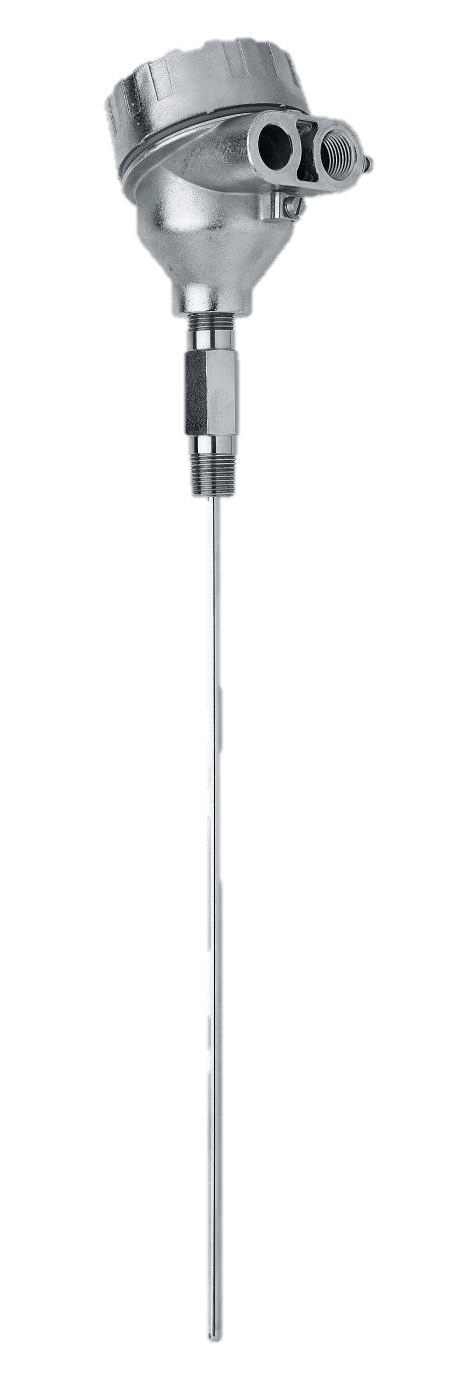
| Single measuring points on tanks & large vessels | Flange-mounted sensor with flanged thermowell; adjustable-coupling tank sensor for flexible immersion | B-FL + MA-FL, RST-T |
Browse by application
Five application areas cover the oil and gas sector. Each links to the matching products in our catalogue.

Sensors engineered for platform duty — process measurement and utility systems in harsh offshore environments.
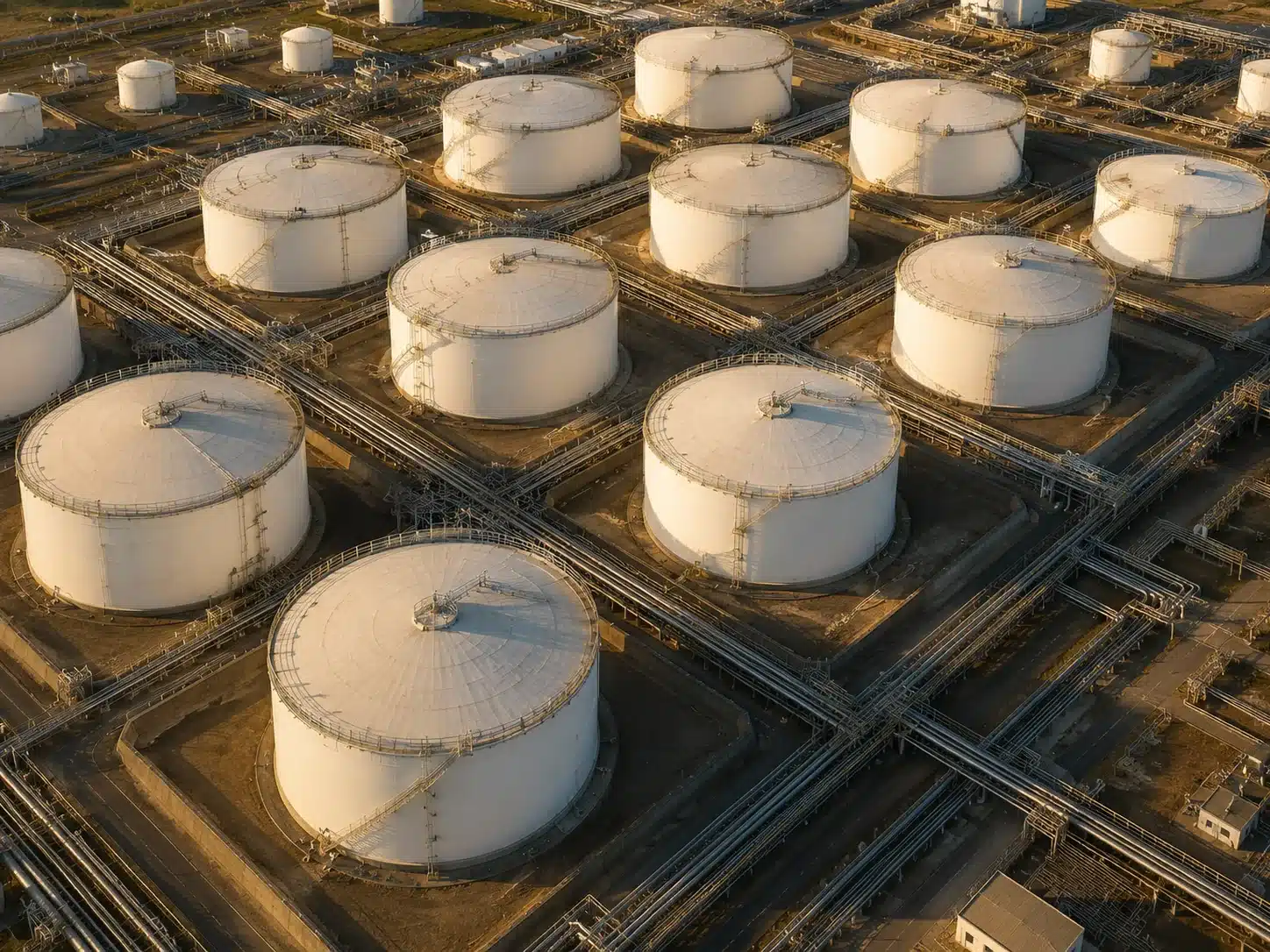
Multi-spot profiling and single-point sensors for storage tanks and terminals.

High-temperature thermocouples and immersion sensors for process units and utilities.
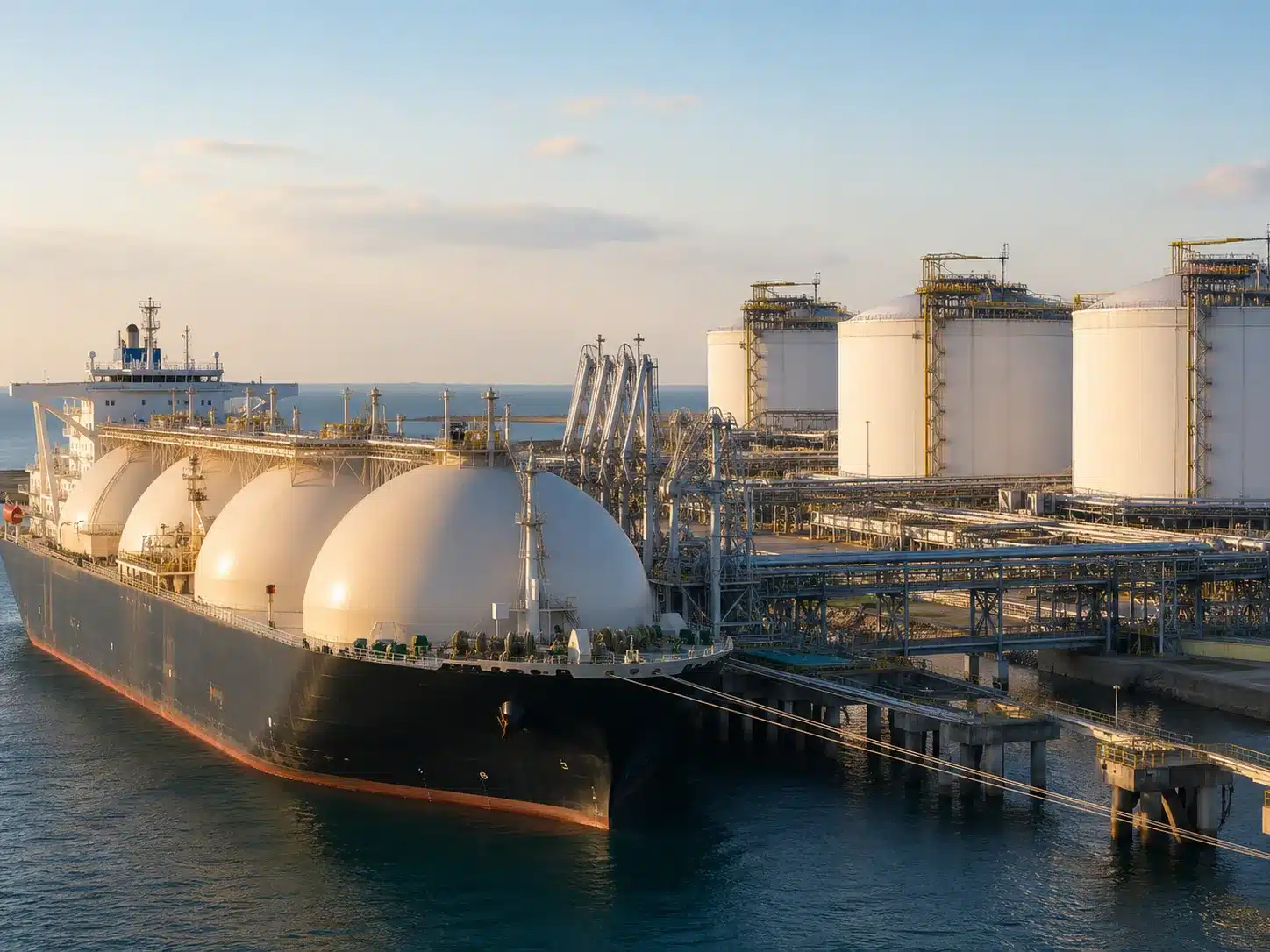
Cryogenic-capable temperature measurement for LNG facilities, down to −196 °C.

Immersion sensors and heavy-wall thermowells for high-pressure pipelines.
Choose by what you need to measure
Every sensor is configured to order in length, material, process connection and output.
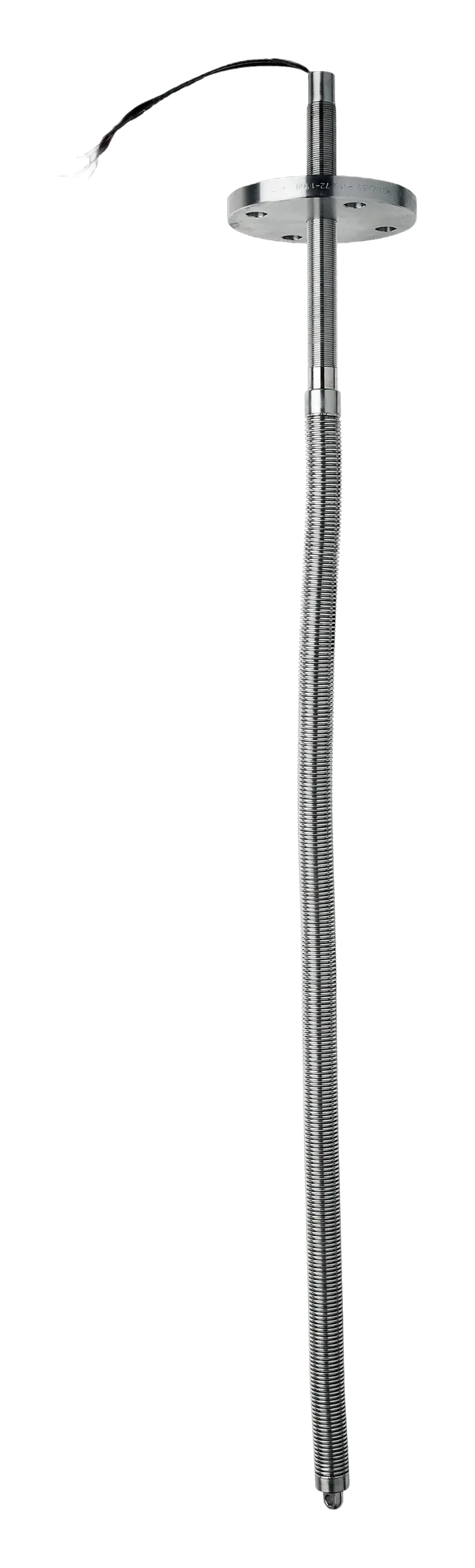
Multi-spot profiling for average temperature, volume and stored energy, with tank sensors for deep points and the cryogenic cold end.
Beyond the standard sensor
Beyond the standard sensor, Kjaerulf Pedersen conditions, stabilises and calibrates each measuring point to the demands of the application — the difference between a reading and a number you can settle on.
Cold applications below −50 °C affect the sensor material and the measurement. Cryo treatment conditions the sensor so it keeps measuring correctly down to −196 °C.
Sensors drift over time, especially under fluctuating temperatures. Ageing stabilises the sensor for minimum drift — steadier readings and more predictable calibration intervals.
In-house calibration across −33 to +700 °C, plus accredited laboratory calibration from −196 to +1200 °C where it is required.
LNG carriers and tankers: the cargo side of the voyage
Oil and gas cargo does not stop moving when it leaves the terminal. Onboard, the same tank measurement continues — cargo tank sensors measure at several levels in the tank, down to cryogenic temperatures — and the Motion Detecting Unit (MDU) from Kjaerulf Pedersen adds the missing dimension: list, trim, pitch and roll at 100 measurements per second, turned into decisions on trim, route and cargo operations.
Boil-off gas is not only a thermal process: pitch and roll drive sloshing inside the cargo containment system, accelerating boil-off beyond the thermal baseline. Continuous motion data lets operators correlate motion patterns with boil-off rates and reduce sloshing through trim and route decisions — delivered cargo economics at discharge.
Continuous list and trim data verifies the ship is trimmed as planned, supports route decisions against the conditions actually met, and documents vessel behaviour through the voyage — a continuous, evidence-based record across load and weather conditions.
Documented in the field: how vessel motion drives boil-off gas on LNG carriers — and how continuous motion data supports trim, route and cargo decisions.
What the Motion Detecting Unit measures, how it installs, and what it does for the vessel itself — the system lives with the ship, the cargo story lives here.
Documented in the field: how continuous motion data verifies trim and supports route decisions on tankers — and what pairing motion with the main engine's shaft power reveals about fuel.
Condition monitoring: catch developing faults before downtime
Condition monitoring watches the health of rotating equipment — pumps, compressors and fans on terminals, platforms and process units — so a fault is caught while it is still developing. Vibration is the earliest warning of mechanical wear: it shows an emerging fault at roughly 10% development, against roughly 40% before a temperature alarm and roughly 60% before it becomes audible. Kjaerulf Pedersen develops and builds its own vibration, motion and dewpoint sensors alongside its temperature range — one supplier for temperature and condition monitoring, plug and play into a PLC or SCADA system for predictive maintenance.
Intelligent 3-axis vibration sensor with on-board FFT. Detects early-stage wear in pump, compressor and fan bearings. Modbus or Bluetooth, straight into a PLC.
KPV200 →Measures angle, tilt and acceleration — the position and movement of structures, cranes and installations, complementing vibration on the health picture.
KPM100 →Humidity, temperature and dewpoint in one IP67 sensor — condensation control in control rooms, cabinets and enclosures.
KPH300 →Why oil and gas operators choose Kjaerulf Pedersen
Multi-spot tank sensors with the measuring points placed to your tank — average temperature, profile, volume and stored energy from a single instrument instead of many.
Standard designs, your dimensions: immersion length, process connection, sheath material, cable and output are built to order — from a prototype to a volume run.
Tank sensors working down to −196 °C with cryo treatment, and thermocouples with heat-proof or ceramic protection for furnaces and process units at the other end.
Every sensor is developed and manufactured by Kjaerulf Pedersen — you talk directly to the people who design and build it, not to a reseller.
Frequently asked questions
What is a multi-spot temperature sensor — and when do I need one?
A multi-spot temperature sensor measures the temperature at several levels inside a storage tank with a single instrument — up to 22 Pt100 or Pt1000 elements in one flexible stainless-steel sensor, in lengths up to 70 metres. It is used where the average temperature, the temperature profile, or volume and stored-energy estimation matter: oil, bitumen and other bulk storage tanks.
How is a multi-spot sensor installed in a storage tank?
The sensor mounts on top of the tank — on a DN50 PN16 flange or a ¾" BSP process attachment — and hangs down through the product, with a bottom weight keeping it vertical. The placement of each measuring element is configured to the individual tank, so the readings sit exactly at the levels your operation needs.
Can temperature sensors measure cryogenic LNG/LPG tanks down to −196 °C?
Yes. Cryogenic storage requires sensors built for it: standard sensors do not measure reliably at these temperatures. The RST-T tank temperature sensor measures from −196 to +250 °C with up to four measuring points at different levels in one sensor, and for duty below −50 °C a cryo treatment conditions the sensor material so it keeps measuring correctly down to −196 °C. Accredited laboratory calibration is available across the same cold range.
Which sensors handle refinery high temperatures?
Thermocouples. For furnaces, heaters and hot process units, Kjaerulf Pedersen builds thermocouple sensors with heat-proof steel or gas-tight ceramic protection — the ceramic-protected families reach the highest furnace temperatures — and mineral-insulated thermocouples where the routing is confined or bent. The selection depends on temperature, atmosphere and mounting; our experts specify it to the unit.
Do you supply material certificates and documentation?
Yes — these are specified with the sensor when you order it: a 3.1 material certificate, a certificate of origin and a certificate of conformity.
What belongs on this page — and what belongs on Marine?
Oil and Gas covers the cargo and the facility: storage and cargo tanks, terminals, refineries, offshore installations, LNG facilities and pipelines — including the cargo side of tanker and LNG carrier operations. Marine covers the vessel and its systems: engines, stern tube, ballast tanks and the marine-approved temperature sensor program, as well as the Motion Detecting Unit (MDU) system itself. The two pages cross-link: start from what you operate — the cargo here, the ship on Marine.
Do you offer condition monitoring for terminals and platforms?
Yes. Alongside temperature, Kjaerulf Pedersen develops its own vibration (KPV200), motion (KPM100) and humidity/dewpoint (KPH300) sensors for condition monitoring. Vibration gives the earliest warning of mechanical wear on rotating equipment — well before a temperature alarm — so maintenance can be planned rather than forced (predictive maintenance). They plug into a PLC or SCADA system.
Can you match or replace a sensor in our existing installation?
Yes — that is what we do. We manufacture to your specification: immersion length, sheath material, process connection, cable and plug, sensor element and output. Send us the data of the existing sensor and we will match it.
Specify your sensor with an expert
Tell us your measuring point — medium, temperature range, pressure, mounting and signal — and we will suggest the right configuration.