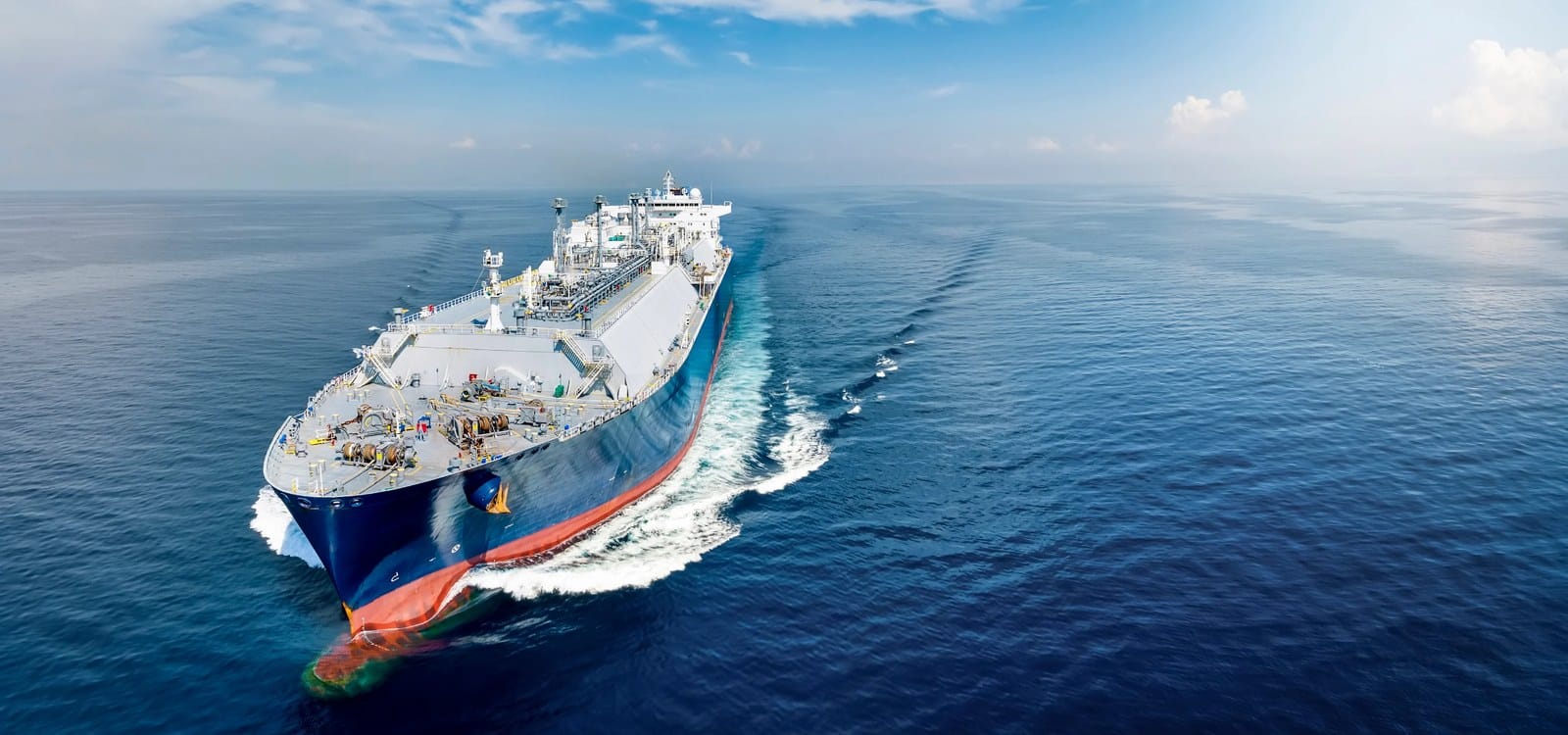
Boil-off gas on an LNG carrier is not only a thermal phenomenon. Pitch, roll and dynamic trim drive sloshing inside the cargo containment system, accelerating boil-off beyond the thermal baseline. The result is reduced delivered cargo, complicated voyage settlements, and operational decisions made without the data needed to support them. Continuous motion data from the Motion Detecting Unit (MDU) addresses that gap directly.
Why vessel motion increases LNG boil-off gas
Boil-off gas (BOG) generation on an LNG carrier is typically discussed as a thermal process. Heat transfer through cargo tank insulation slowly converts liquid LNG to gas during a voyage, and that part of the picture is well understood and routinely managed.
What is less consistently documented is the role of vessel motion. When a carrier pitches and rolls in moderate to rough seas, liquid LNG inside the containment system sloshes against the tank structure. The mechanical energy from that agitation accelerates phase transition from liquid to gas, meaning more boil-off than thermal ingress alone would produce. Pitch and roll directly increase sloshing inside cargo tanks, accelerating boil-off gas generation and affecting cargo delivery efficiency, fuel consumption and operational costs.
For chartering managers and cargo operators, the consequences are practical. Excess motion-induced BOG reduces the cargo volume delivered at discharge. It complicates the calculations and documentation that voyage settlements depend on. And without continuous motion data, the cause of any specific shortfall is difficult to evidence after the fact.
“On LNG carriers, boil-off gas generation is not only a thermal process — vessel motion also plays a critical role.”
From the Kjaerulf Pedersen a/s LNG carrier case study
What the MDU measures and how it integrates onboard
The Motion Detecting Unit is a self-contained onboard system that captures vessel motion in real time, including pitch, roll and motion intensity. The unit is built around a hybrid sensor platform with accelerometer, gyroscope and magnetometer, providing the inertial data needed to characterise vessel behaviour at the resolution operational decisions require. Updates run at 100 measurements per second, with both live and historical motion data available to the bridge.
The MDU is designed for autonomous operation. Data processing is handled internally, and the system supports configurable visual alarms tied to motion thresholds set for the vessel. It is built to operate continuously and integrates with existing onboard systems, so motion data can be combined with other operational inputs rather than treated as a parallel stream.
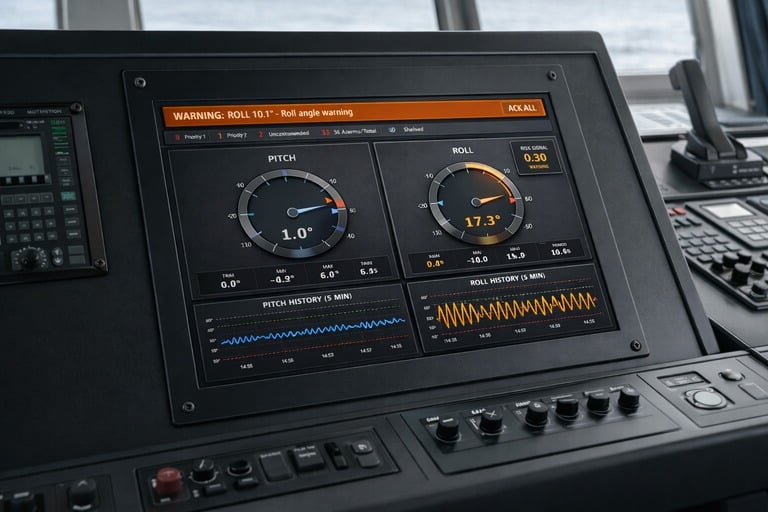
How motion data changes operational decisions
Live motion data only matters if it changes what crew and operators do. Linking motion data with trim and route decisions is what enables LNG operators to reduce sloshing inside cargo tanks, lower boil-off gas generation, improve fuel efficiency and maximise delivered cargo. The MDU provides the continuous, high-resolution input that makes those decisions data-driven rather than reactive.
In practice, that translates into smarter route planning when forecast conditions match the vessel’s roll-natural period, real-time decision support during rough sea conditions, and a continuous motion record that supports voyage documentation. Captains and operators can compare actual vessel movements against weather conditions and adjust accordingly, including how engine performance should be managed in response to vessel behaviour.
Beyond cargo economics, the same motion data supports broader operational efficiency. By informing trim, route and speed decisions, it helps reduce fuel consumption, emissions and mechanical wear — and supports operators in meeting current and upcoming IMO requirements, contributing to safer voyages and a more data-informed approach to LNG carrier operations.
What operators ask most
How does vessel motion affect LNG boil-off gas?
Pitch and roll cause liquid LNG to slosh against cargo tank structure. The mechanical energy from that agitation accelerates phase transition from liquid to gas, generating boil-off beyond what thermal ingress alone would produce. The MDU captures this motion in real time, helping operators reduce sloshing through trim and route decisions.
What does the MDU measure on an LNG carrier?
The MDU captures vessel motion at 100 measurements per second, including pitch, roll and motion intensity. It is built on a hybrid sensor platform with accelerometer, gyroscope and magnetometer, and provides both live and historical motion data on the bridge with configurable visual alarms.
Can MDU motion data support voyage documentation?
Yes. The MDU records continuous, time-stamped motion data and stores both live and historical readings. That record can support voyage documentation, post-voyage analysis, and operational decisions where evidence of vessel behaviour during specific conditions is relevant.
How does the MDU integrate with existing onboard systems?
The MDU integrates seamlessly with existing onboard systems, allowing motion data to be combined with other operational inputs. It is designed for autonomous installation and operates continuously alongside vessel control and monitoring systems already in use on the bridge.
How does the MDU help with fuel efficiency and IMO requirements?
By capturing continuous pitch, roll and motion data, the MDU helps operators optimise trim, routing and speed. That reduces fuel consumption, emissions and mechanical wear, and supports operators in meeting current and upcoming IMO requirements on vessel efficiency.
Discuss MDU for your LNG fleet
For technical specifications, integration questions or fleet-scale deployment, the marine solutions team at Kjaerulf Pedersen a/s is the right starting point.