Power & Energy › Incineration & Waste-to-Energy
Temperature measurement for waste incineration and waste-to-energy
Reliable temperature measurement in waste incineration depends on protection against heat, corrosive gases and particle wear. KP builds thermocouple assemblies for these conditions, selecting the element, protection tube and mounting for each zone of the plant.
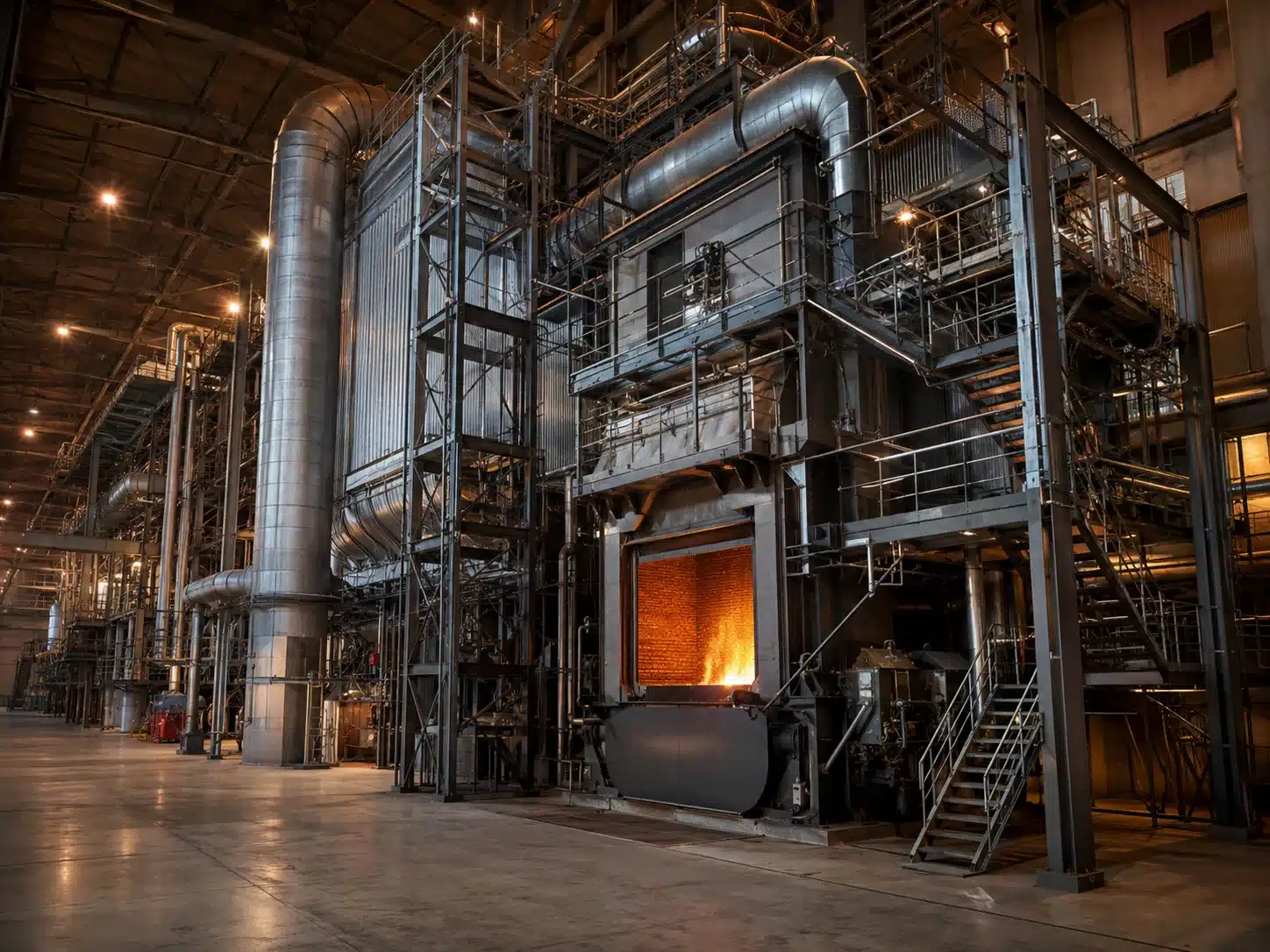
Kjaerulf Pedersen a/s manufactures thermocouple assemblies for waste incineration and biomass combustion. The programme includes Type K and N for combustion and flue gas measurement, and ceramic-protected Type S, R and B assemblies for high-temperature duties up to 1600 °C. Thermowell-mounted temperature sensors cover the boiler, steam and water circuits.
Which temperature sensor for each zone?
A waste-to-energy plant measures temperature from the grate to the stack. Use the guide below to identify a suitable sensor construction for the conditions at each measuring point.
| Zone or measuring task | Operating conditions | Construction to consider | Products |
|---|---|---|---|
| Combustion chamber & grate | Sustained heat, corrosive gases and exposure to slag or particles | Type K or N thermocouple with a heat-resistant steel protection tube. Select the material and installation position for the gas atmosphere and exposure to wear; a ceramic inner tube provides additional protection against element contamination. | AM/AMC, BM/BMC |
| High-temperature duties | Temperatures and stability requirements calling for noble-metal thermocouples | Type S, R or B thermocouple with gas-proof ceramic protection. Suitable configurations provide continuous measurement up to 1600 °C. | AC/ACC, BC/BCC |
| Flue gas ducts & exhaust channels | Gas temperature, corrosion conditions and the reach needed across the duct | A thermocouple with protection material selected for the flue gas composition and any condensation. An adjustable flange or compression fitting sets the immersion depth. | AM/AMC, AC/ACC |
| Boiler, steam & water circuits | Pressure, flow loads and access for sensor maintenance | Pt100 or thermocouple assembly in a solid-machined DIN 43772 weld-in thermowell. Select the material and geometry from the operating conditions and pressure-rating diagrams. The measuring insert can be replaced while the thermowell remains installed. | Type D, MA-PW-D |
| Confined & built-in points | Limited installation space and response requirements | A mineral-insulated thermocouple selected for the available space and operating temperature. High-temperature options include Type S (Pt10%Rh-Pt), rated up to 1600 °C. | TM2, TM3, TM4 |
KP selects the thermocouple, protection material, immersion length and mounting as one assembly for the application. For pressure-loaded installations, see the thermowell pressure-rating diagrams.
When the measurement calls for noble metal
Type S, R and B thermocouples use platinum and rhodium. They are chosen when the temperature range or stability requirements justify the higher material cost. The protection tube is an essential part of that choice.
For duties beyond the working range of a base-metal assembly, KP offers ceramic-protected Type S, R and B thermocouples for continuous measurement up to 1600 °C.
At sustained high temperatures, drift can make the indicated temperature differ from the actual process temperature. Noble-metal thermocouples are selected where long-term stability is important for process control and reliable operating records.
Platinum-rhodium elements need protection from substances that can alter their thermoelectric properties. A gas-proof ceramic tube limits exposure to the process atmosphere and helps preserve measurement stability.
Frequently asked questions
Which thermocouple type should I use for waste incineration?
Type K and N thermocouples are used for combustion and flue gas measurement. Type N is often selected for stability during sustained high-temperature operation. Where the duty calls for a higher temperature range or a noble-metal element, Type S, R or B with ceramic protection is an option; suitable assemblies provide continuous measurement up to 1600 °C. Selection also depends on the protection tube, gas atmosphere and exposure to wear.
What is the difference between Type K, N, S, R and B?
Type K and N are base-metal thermocouples used in combustion and flue gas applications. Type S and R pair a platinum-rhodium alloy with platinum; Type B uses platinum-rhodium alloys in both legs. Noble-metal types are chosen for high-temperature duties and stability requirements, with ceramic protection selected to limit contamination.
How do you protect a thermocouple against corrosive flue gas?
Select the outer protection material for the gas composition and operating temperature. KP's programme includes EN 1.4749 (4C54) heat-resistant steel protection tubes and ceramic-protected constructions. A gas-proof ceramic inner tube can provide an additional barrier against thermocouple contamination. The complete construction must also suit condensation, particle wear and the mounting position.
Can a sensor be replaced without stopping the process?
On the boiler, steam and water side, Type D assemblies use a replaceable measuring insert inside a weld-in thermowell. The thermowell remains installed and keeps the process sealed during insert replacement. Whether the work can be done during operation depends on the installation and maintenance procedures. Direct-mounted combustion sensors are normally replaced during planned service.
Why are noble-metal thermocouples so expensive?
Their elements contain platinum and rhodium, so the precious-metal content contributes substantially to the price. They are used when the temperature and stability requirements justify that cost. KP's ceramic-protected assemblies support continuous measurement up to 1600 °C; the ceramic protection helps preserve the element's properties by limiting contamination from the process atmosphere.
Do you also cover the steam side of a waste-to-energy plant?
Yes. KP supplies Pt100 and thermocouple assemblies for boiler, steam and water circuits, including Type D sensors with solid-machined weld-in thermowells. For the weld-in materials and dimensions in our pressure-rating guide, water service extends up to 450 bar at flow velocities up to 5 m/s; permissible pressure also depends on temperature. Steam ratings follow the corresponding load curves. Bearing and surface sensors for turbines and fans are included in the Power & Energy programme.
Get a zone-by-zone sensor recommendation
Send us the temperatures, process media and mounting details for the zones you need to measure. If an existing sensor is wearing out or drifting, include its specification and a description of the problem so we can recommend a suitable construction.