Temperature & humidity sensors for HVAC
Temperature, humidity and dewpoint sensors for air-handling units, chillers, heat pumps and building climate systems — developed together with HVAC equipment builders and configured to your exact measuring point, from the hydronic circuit to the supply-air duct.
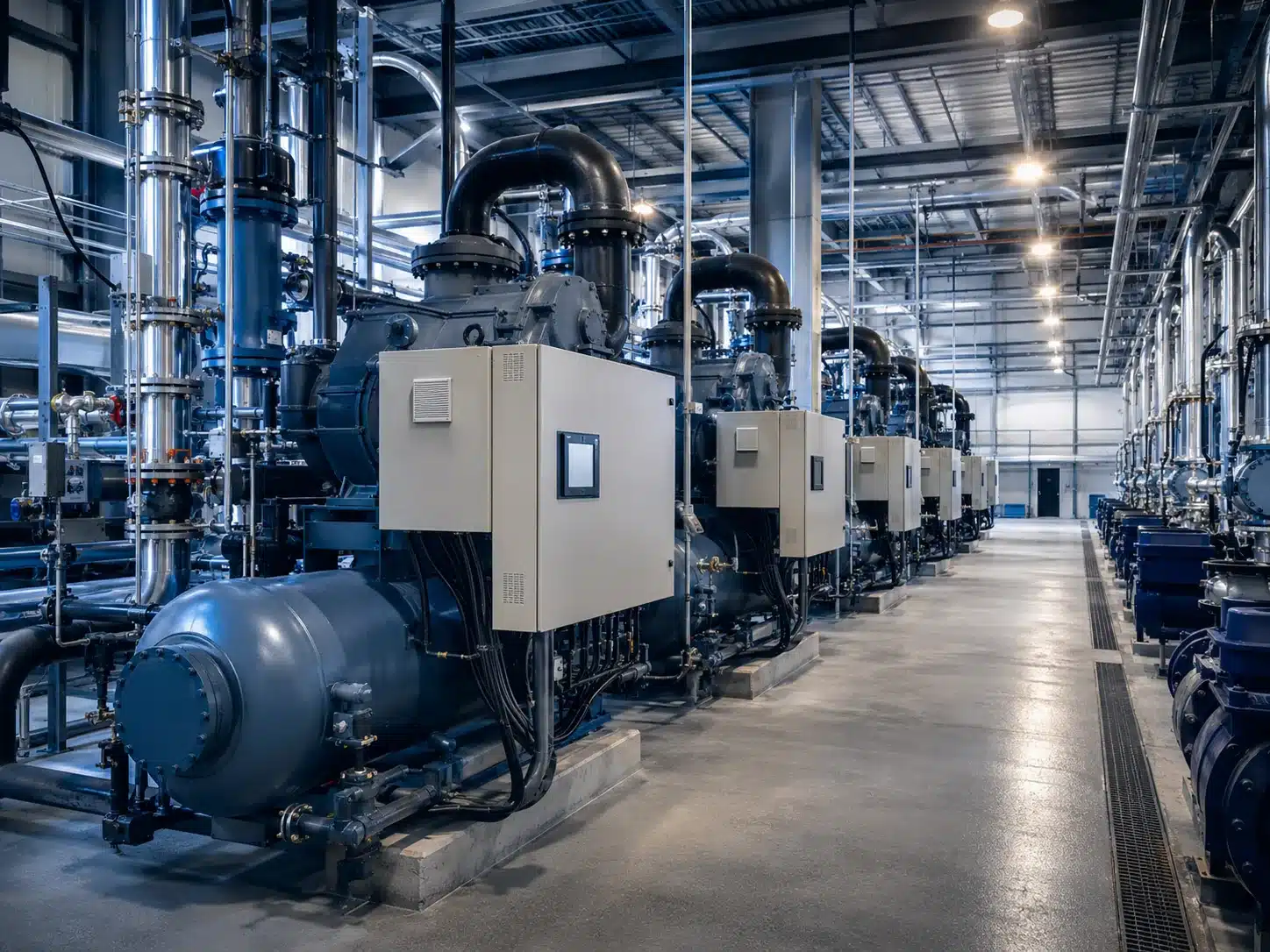
Kjaerulf Pedersen a/s designs and manufactures temperature, humidity and dewpoint sensors — plus vibration and condition-monitoring sensors — for HVAC equipment builders and building operators, configured to the individual measuring point: duct and supply air, chilled- and hot-water circuits, surface and room measurement, humidity and dewpoint control, and the vibration of fans, pumps and compressors.
The right sensor for every HVAC measuring point
An HVAC system is not one measurement — it is a dozen different ones, each with its own medium, range and mounting. Instead of a single generic probe, KP configures the correct sensor for each point. Start from where you need to measure:
| Measuring point | Typical measurement | KP sensor |
|---|---|---|
| Supply, return & duct air | Air temperature in ducts and air-handling units; fast response via slotted or open tube | AUFO, RC1/TC1 |
| Air-handling unit, multipoint | Several air temperatures and airflow across one unit on a single bus | TempMux-8 (up to 8× PT1000) |
| Chilled- & hot-water circuits | Immersion measurement in hydronic pipework; thermowell for service without draining | BP2, BP1, BUI + MA-PW1 |
| Confined / high-temperature points | Bendable mineral-insulated sensors where space is tight or temperatures run high | RM1, RM3 |
| Pipe & surface | Contact measurement on pipes and flat surfaces; brass for speed, steel for durability | RSM |
| Room & space | Indoor and outdoor air temperature; robust IP67 housings | RR1, RR1-P |
| Humidity & dewpoint | Relative humidity in ducts; humidity, temperature and dewpoint for condensation control | KPH101, KPH300 |
| Fans, pumps & compressors | Vibration — early-stage wear detection on rotating equipment | KPV200 |
Find your application
Four application areas cover the HVAC sector. Each links to the matching products in our catalogue.
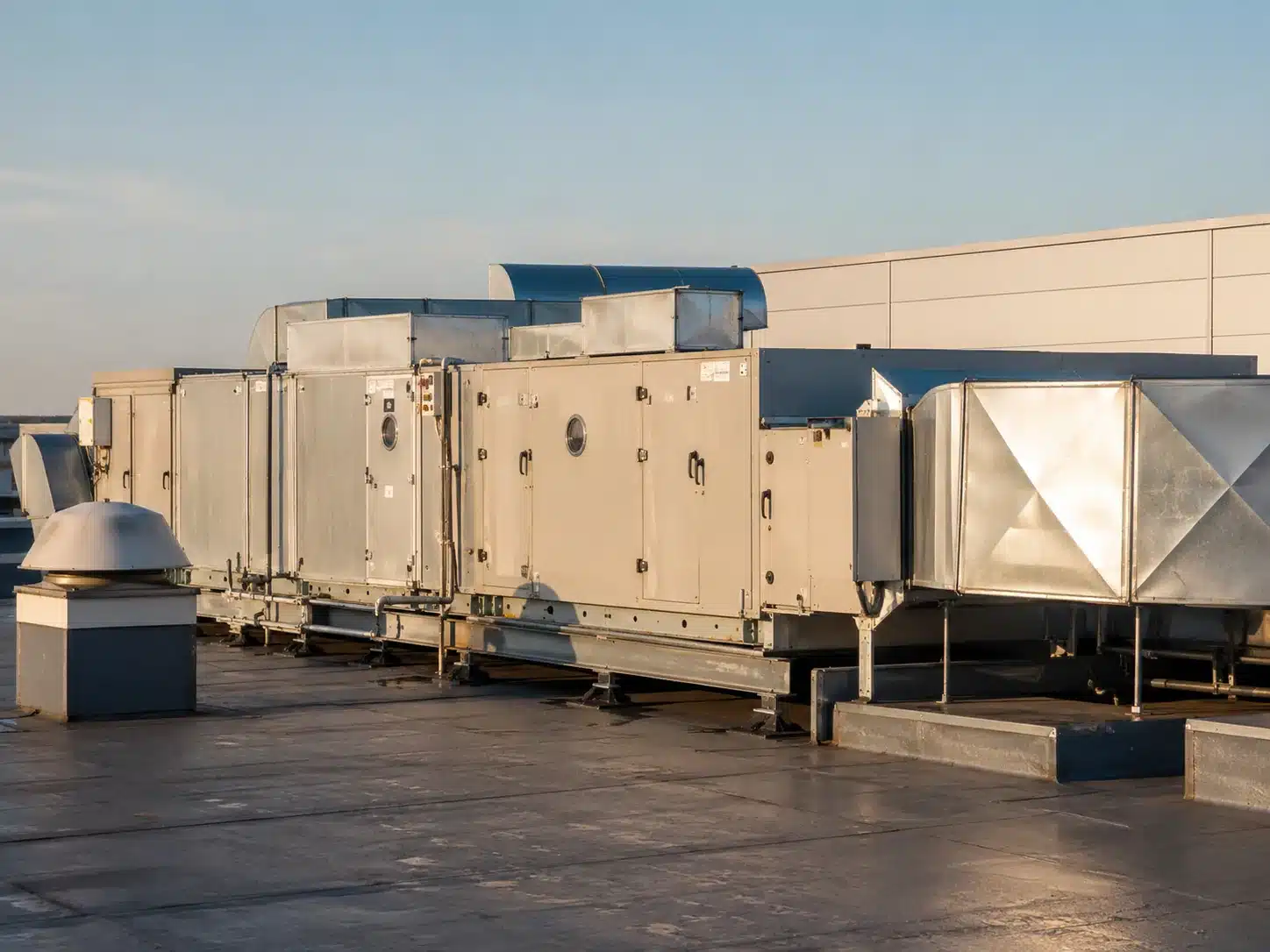
Duct and supply-air temperature, airflow and humidity for air-handling units and ventilation systems.

Temperature, humidity and dewpoint measurement for a stable indoor climate and energy efficiency.
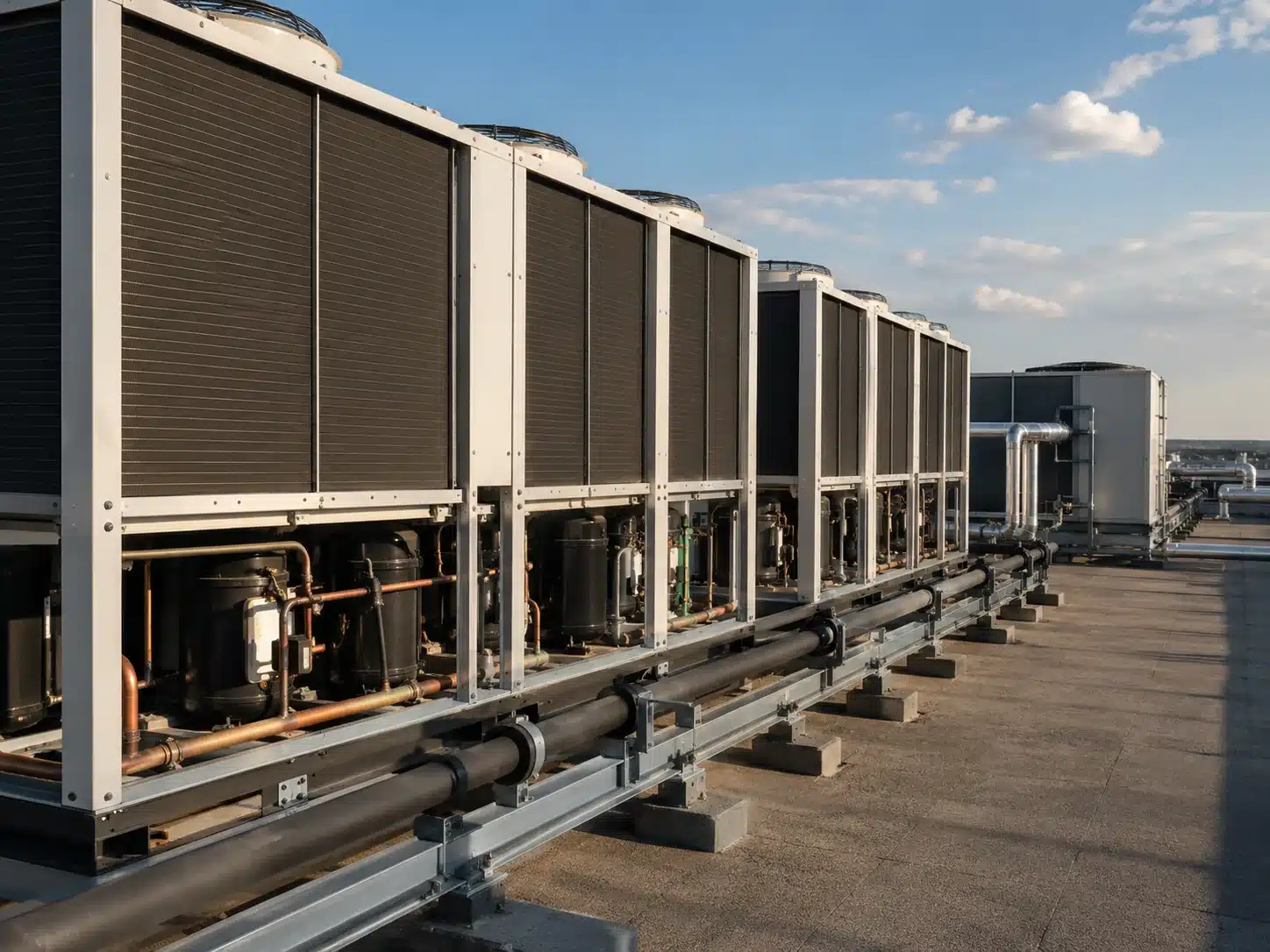
Immersion, surface and air sensors for chillers, heat pumps and cooling circuits.
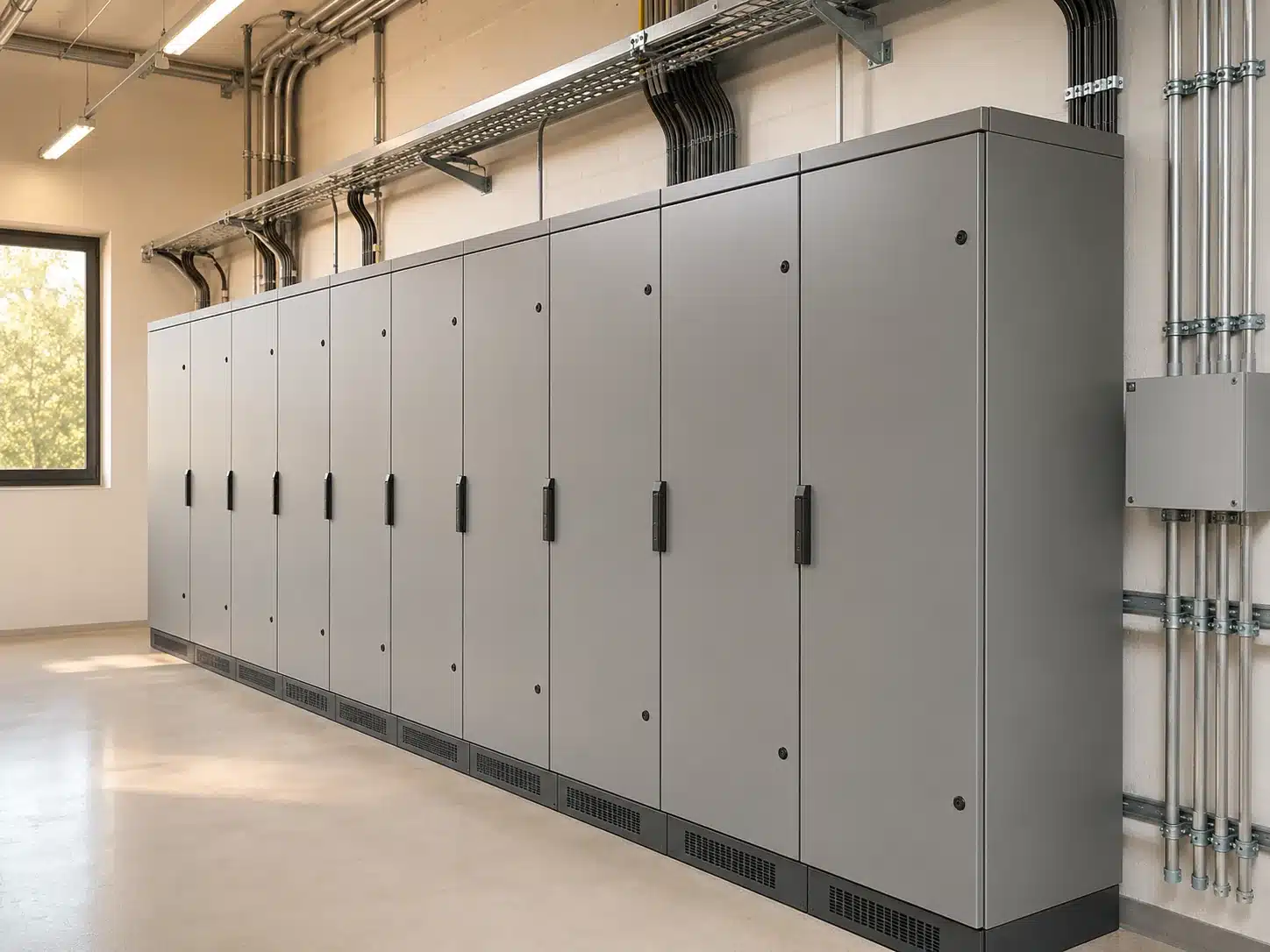
Sensors with 4–20 mA and Modbus RTU outputs for integration into building management systems.
Cold chain or commercial refrigeration? See Refrigeration →
The measuring points of an HVAC system
Choose by what you need to measure — every sensor is configured to order in length, material, connection and output.
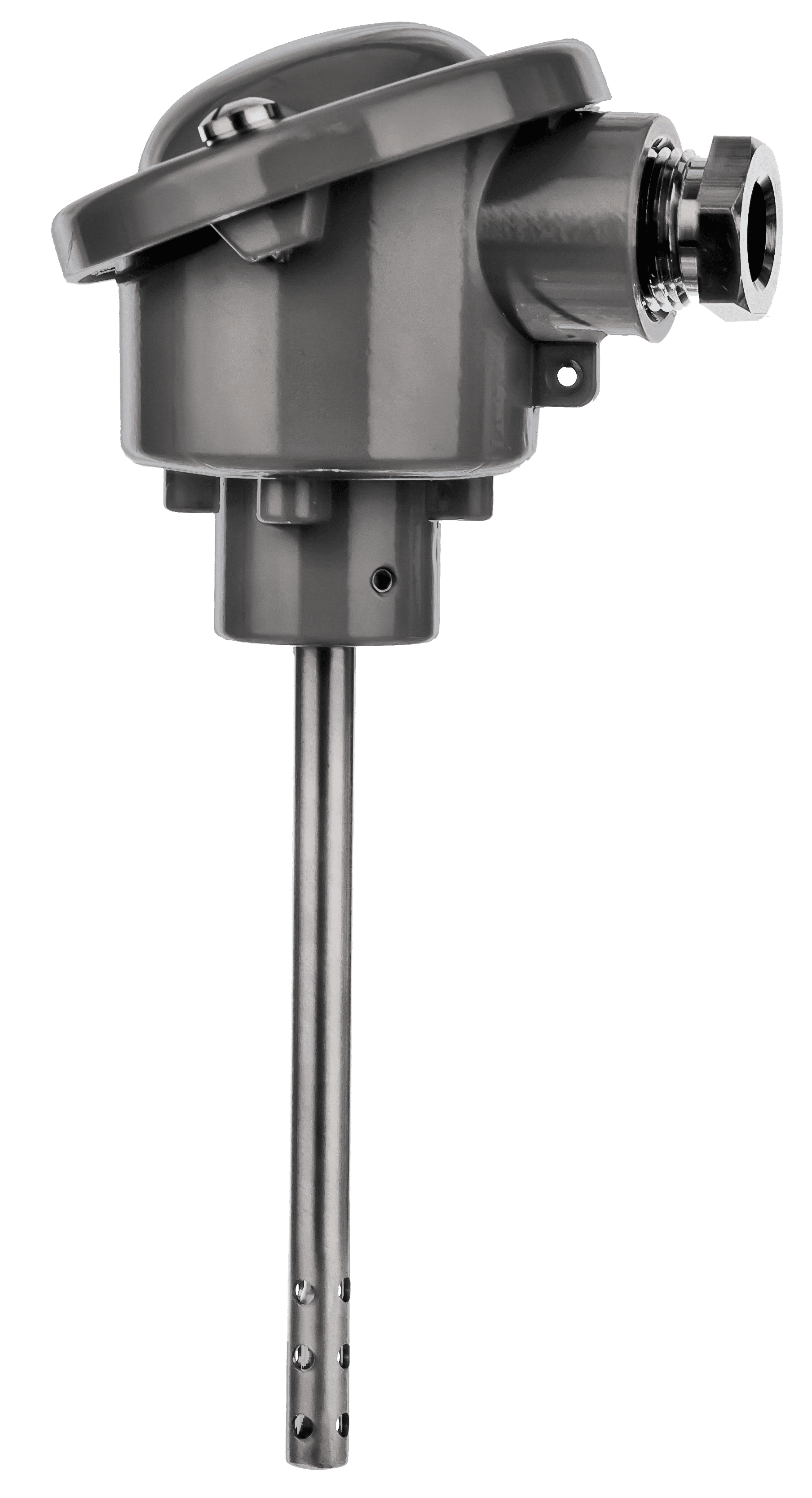
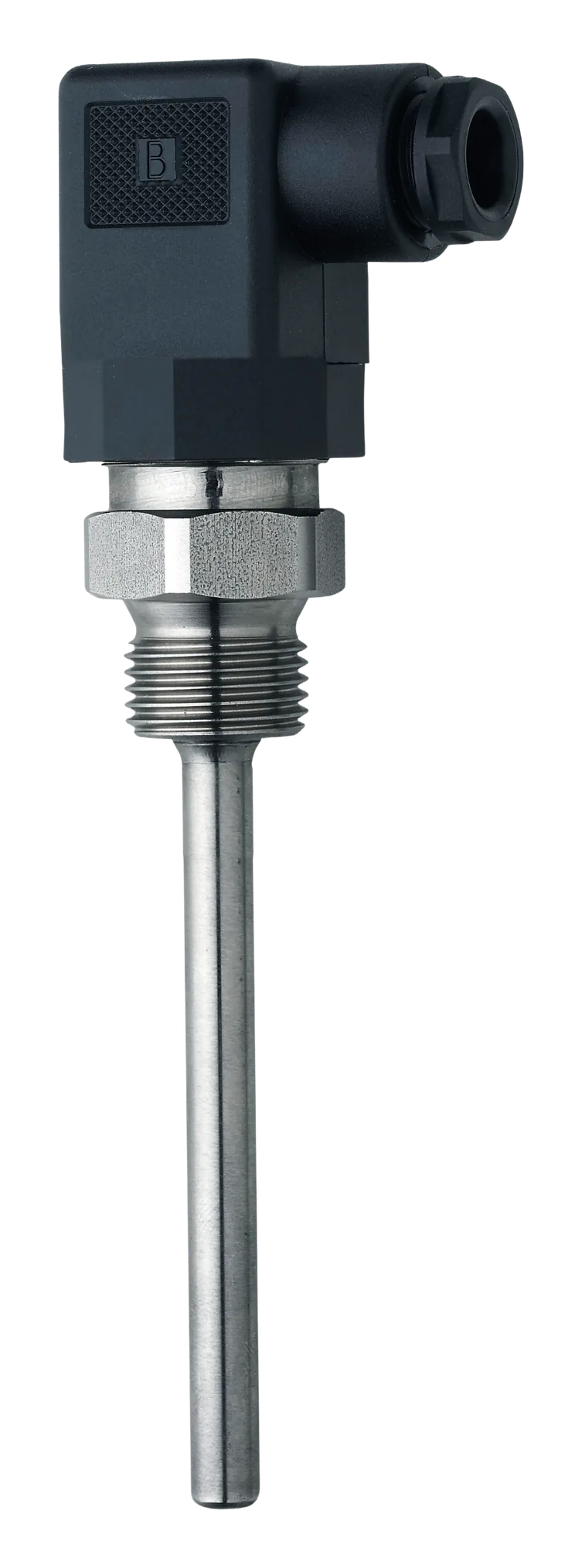
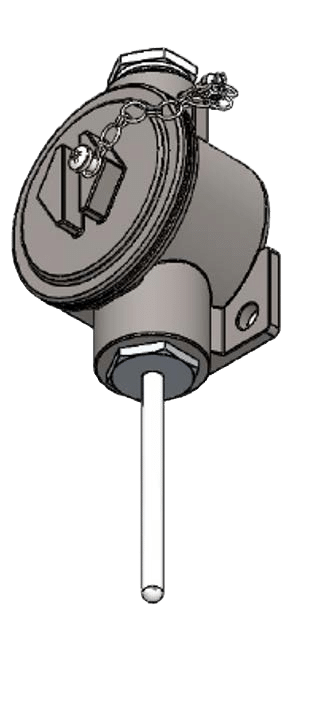
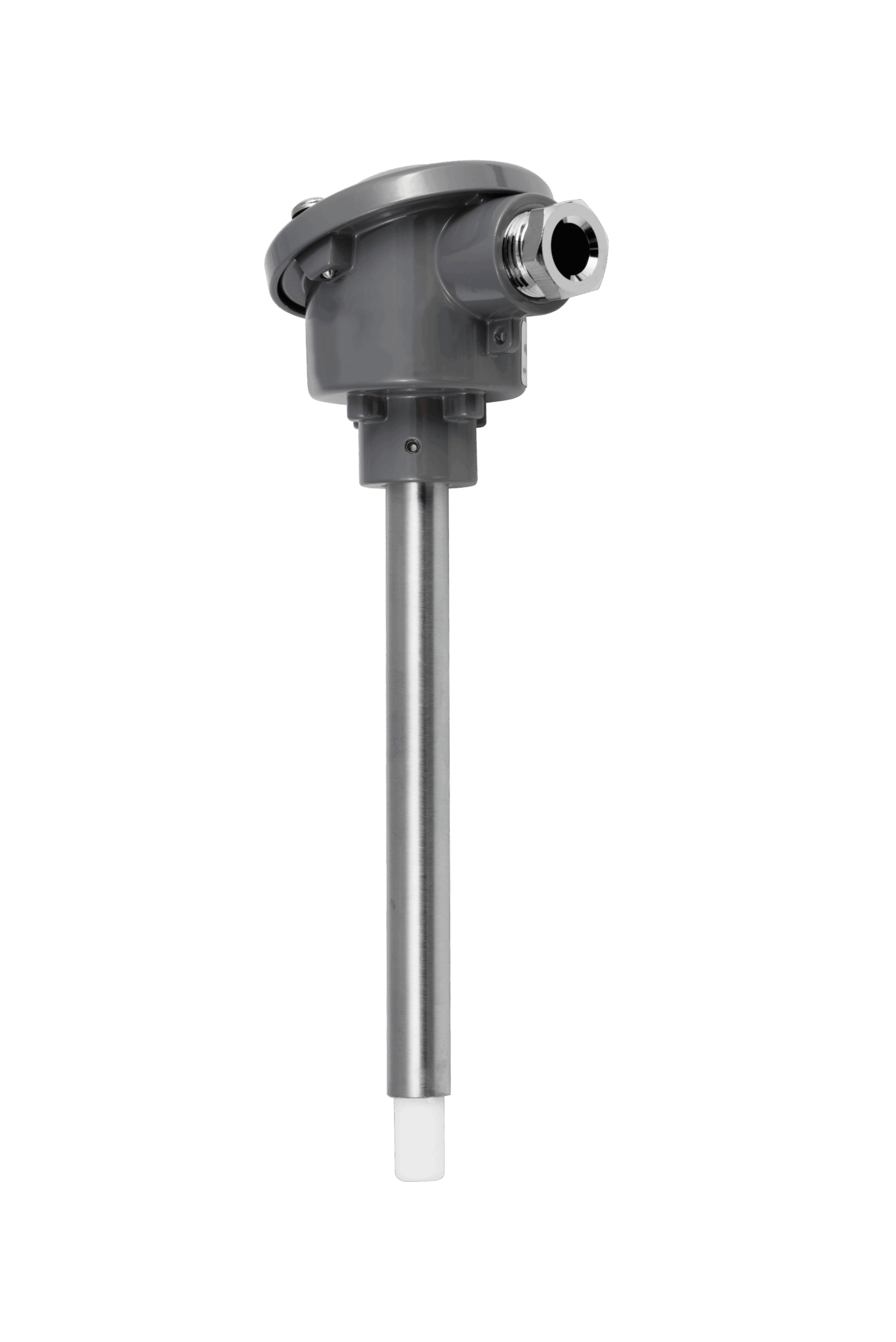
Temperature sensors are available with head-mounted transmitters — 4–20 mA and HART — for direct integration with HVAC controllers and building management systems.
Catch developing faults before they become downtime
In HVAC, rotating equipment — fans, pumps and compressors — wears over time, and the earliest sign is a change in vibration: a developing fault shows at roughly 10% progression, long before a temperature alarm (around 40%) or an audible symptom (around 60%). KP's condition-monitoring sensors watch for that change continuously, so you service on your schedule — not after an unplanned breakdown.
Continuously monitors vibration on fans, pumps, motors and compressors. A change in the vibration signature is the earliest indicator of bearing wear, imbalance or a lubrication problem — so you act before a breakdown and target maintenance where it's needed.
KPV200 →Angle, tilt and acceleration — foundation and structural movement in building automation, documenting that a building's footing stays where it should, even during extreme events.
KPM100 →Humidity, temperature and dewpoint in one IP67 sensor — condensation and climate control in air-handling units, plant rooms and enclosures.
KPH300 →Why HVAC builders choose KP
We develop sensors together with HVAC manufacturers — solving the measuring-point problems in their equipment and staying with them across the product's life.
Standard designs, your dimensions: immersion length, process connection, cable, plug and output are built to order — also in small volumes and prototype runs.
Air, water, surface and room temperature; humidity and dewpoint; vibration and motion — sourced from one manufacturer instead of stitched together from several.
Every sensor is developed and manufactured by KP — you talk directly to the people who design and build it, not to a reseller.
Frequently asked questions
Which sensors are used in HVAC systems?
Pt100 and Pt1000 RTD sensors handle most HVAC measurement — duct and supply air, chilled- and hot-water circuits, surfaces and rooms. Humidity and dewpoint are measured with dedicated humidity sensors, and vibration sensors monitor the health of fans, pumps and compressors. KP supplies all of these, configured to the individual measuring point.
Do you supply sensors to HVAC equipment builders (OEMs)?
Yes — this is our core business. We develop sensors together with HVAC manufacturers, matching each measuring point in their equipment, and manufacture from prototype through to volume with in-house development and production. Send us the requirement of the measuring point and we design to it.
Should I use an RTD or a thermocouple in HVAC?
For the temperatures found in HVAC — air, chilled and hot water, surfaces and rooms — Pt100/Pt1000 RTDs to IEC 60751 are the standard choice for their accuracy and stability. Thermocouples to IEC 60584-1 are used only where a point runs hotter than an RTD comfortably covers.
Can you measure humidity and dewpoint as well as temperature?
Yes. The KPH101 measures relative humidity in ducts with a 4–20 mA output, and the KPH300 reports humidity, temperature and dewpoint from a single IP67 housing for condensation and climate control. These sensors measure humidity, temperature and dewpoint — not air-quality gases.
Do your sensors integrate with a BMS or control system?
Yes. Temperature sensors are available with 4–20 mA or head-mounted transmitters, Pt1000 sensors suit 2-wire controllers, and the TempMux-8 and KPV200 communicate over Modbus RTU — ready to integrate with building management, PLC or SCADA systems.
Do you also cover HVAC on ships and commercial refrigeration?
Yes, but on their own pages. HVAC on board ships is covered under our Marine industry area, and cold-chain and commercial refrigeration under Refrigeration. This HVAC page covers building and equipment climate systems.
Can KP match or replace a sensor in our existing equipment?
Yes — that is what we do. We manufacture to your specification: immersion length, sheath material, process connection, cable and plug, sensor element and output. Send us the data of the existing sensor and we will match it.
Specify your HVAC sensor with an expert
Tell us your measuring point — medium, temperature range, mounting and signal — and we will suggest the right configuration.