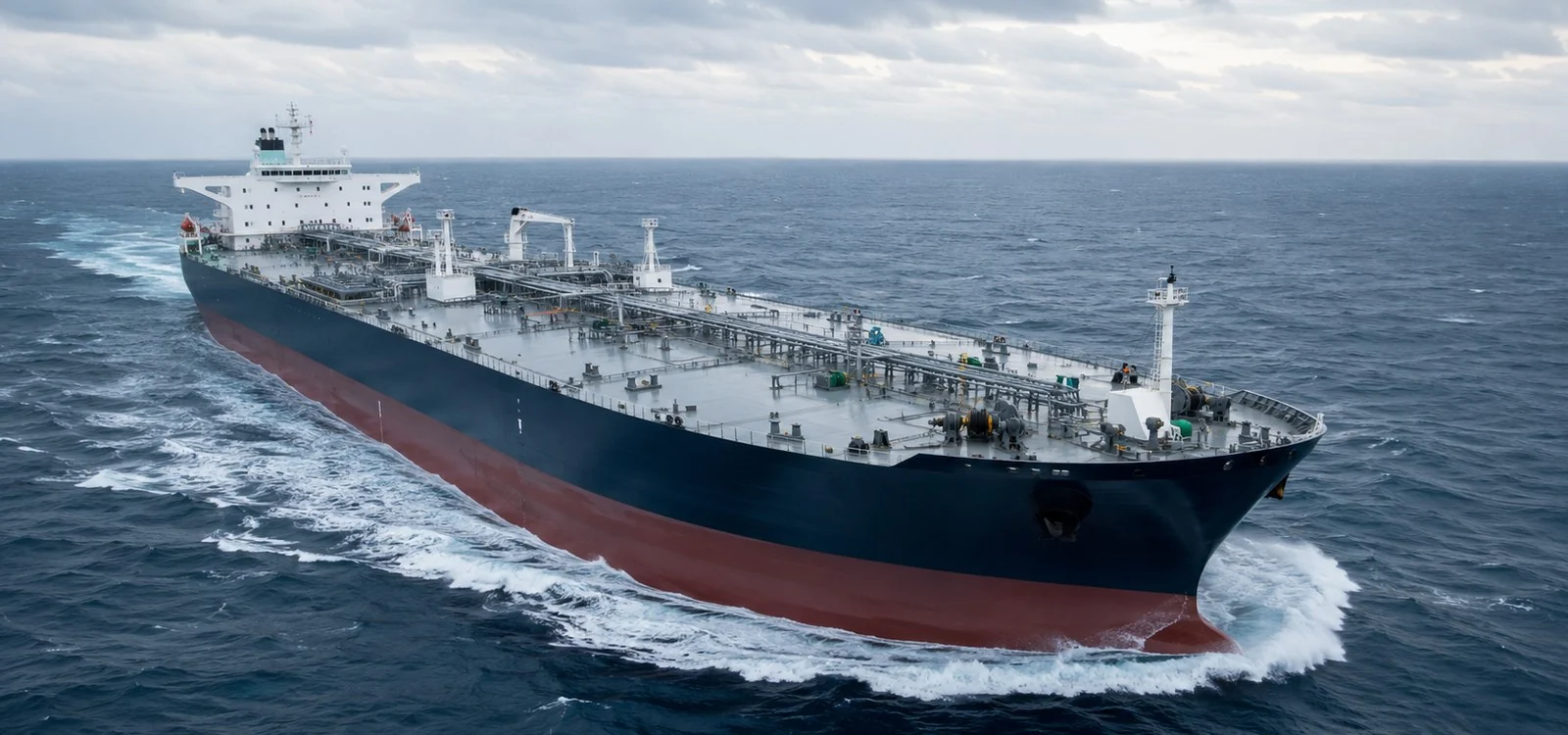
For an oil tanker, the gap between a good voyage and an expensive one is small and continuous: how the ship is trimmed, the route it takes through the weather, and how hard the engine works to push through the sea. Traditionally those are fixed before departure — from trim tables and a planned route, a static snapshot. The Motion Detecting Unit (MDU) from Kjaerulf Pedersen a/s adds the missing half: continuous, real-time motion data to check trim, routing and propulsion against what the ship is actually experiencing.
From static trim tables to live motion data
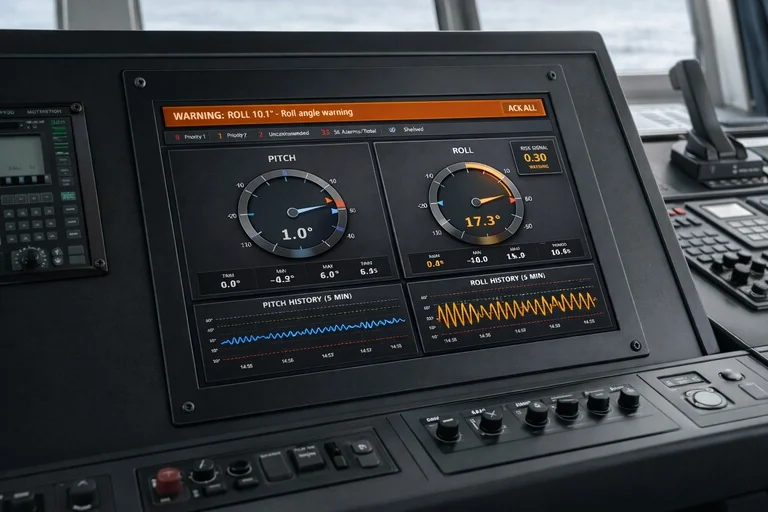
Traditionally, a tanker is trimmed using trim tables and manual draught readings taken before departure — a calculated, one-moment-in-time picture. The MDU measures the ship’s motion continuously, throughout the voyage.
It delivers real-time list and trim data, alongside pitch, roll and motion intensity, which — combined with draught, speed and load condition — lets crew and onboard systems check whether the ship is actually trimmed as planned, watch how trim and list change underway, and find opportunities to optimise trim as conditions shift.
Checking trim and route against reality
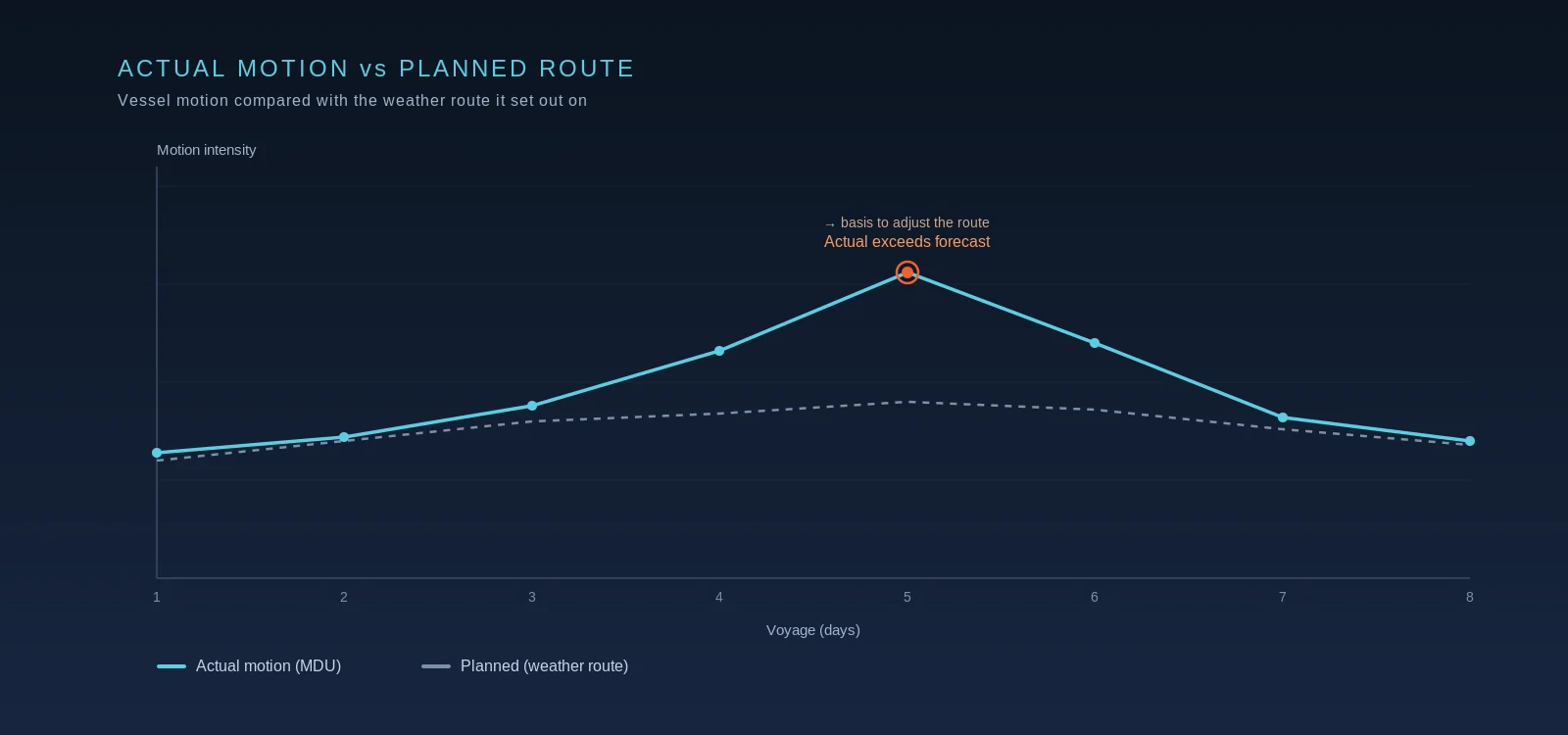
A plan is only a starting point. With continuous motion data, operators can compare what the ship actually experiences against what was planned. One tanker operator has used MDU data to compare the vessel’s real movements against the planned weather route — a basis for judging whether the route should be adjusted to the conditions the ship is genuinely meeting, rather than the forecast it set out on.
When the sea costs fuel: motion and shaft power
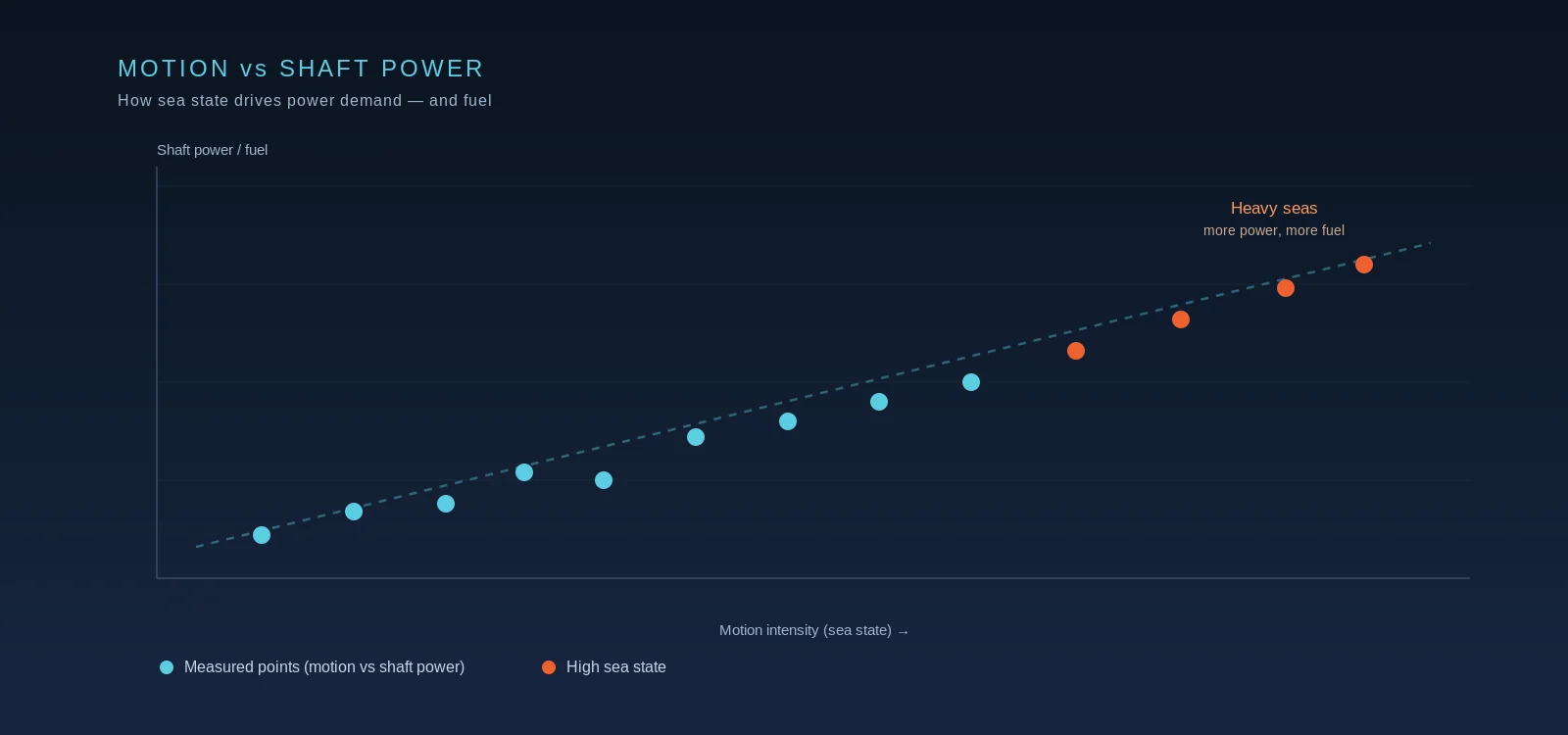
Heavy seas don’t just make for an uncomfortable voyage — they can cost fuel. One operator has compared the vessel’s motion data with the main engine’s shaft power, the mechanical power delivered to the propeller shaft, to investigate how rough seas, rolling and pitching drive up the power required, and with it fuel consumption. Pairing motion with propulsion turns a vague sense that “the weather cost us” into something measurable.
What’s specific to tankers here isn’t a tanker-only problem — it’s that tanker operators can use real motion data to document and optimise trim, route and propulsion across different load and weather conditions.
What operators ask most
How does the MDU help with tanker trim optimization?
It provides continuous real-time list and trim data; combined with draught, speed and load, operators can verify the ship is trimmed as planned and find ongoing optimisation, rather than relying only on pre-departure trim tables.
Can motion data improve weather routing?
Yes. By comparing actual vessel movements against the planned weather route, operators can judge whether to adjust the route to the conditions the ship is really experiencing.
How does vessel motion relate to fuel consumption?
Rough seas, rolling and pitching increase the power the main engine must deliver. Comparing motion data with shaft power shows how sea conditions drive power demand — and fuel use.
What does the MDU measure?
Real-time list, trim, pitch, roll and motion intensity at 100 measurements per second, on a hybrid accelerometer, gyroscope and magnetometer platform, available on the bridge and to onboard systems.
Is this specific to oil tankers?
The motion data isn’t tanker-only, but it’s especially useful to tanker operators, who can use it to document and optimise trim, route and propulsion under varying load and weather conditions.
Discuss the MDU for your tanker fleet
For technical specifications, integration questions or fleet-scale deployment, the team at KP is the right starting point.