Product · Temperature Sensors
USDA Sensor & Pulp Probe for Reefer Containers
Find your local partner on the distributor map.
Application
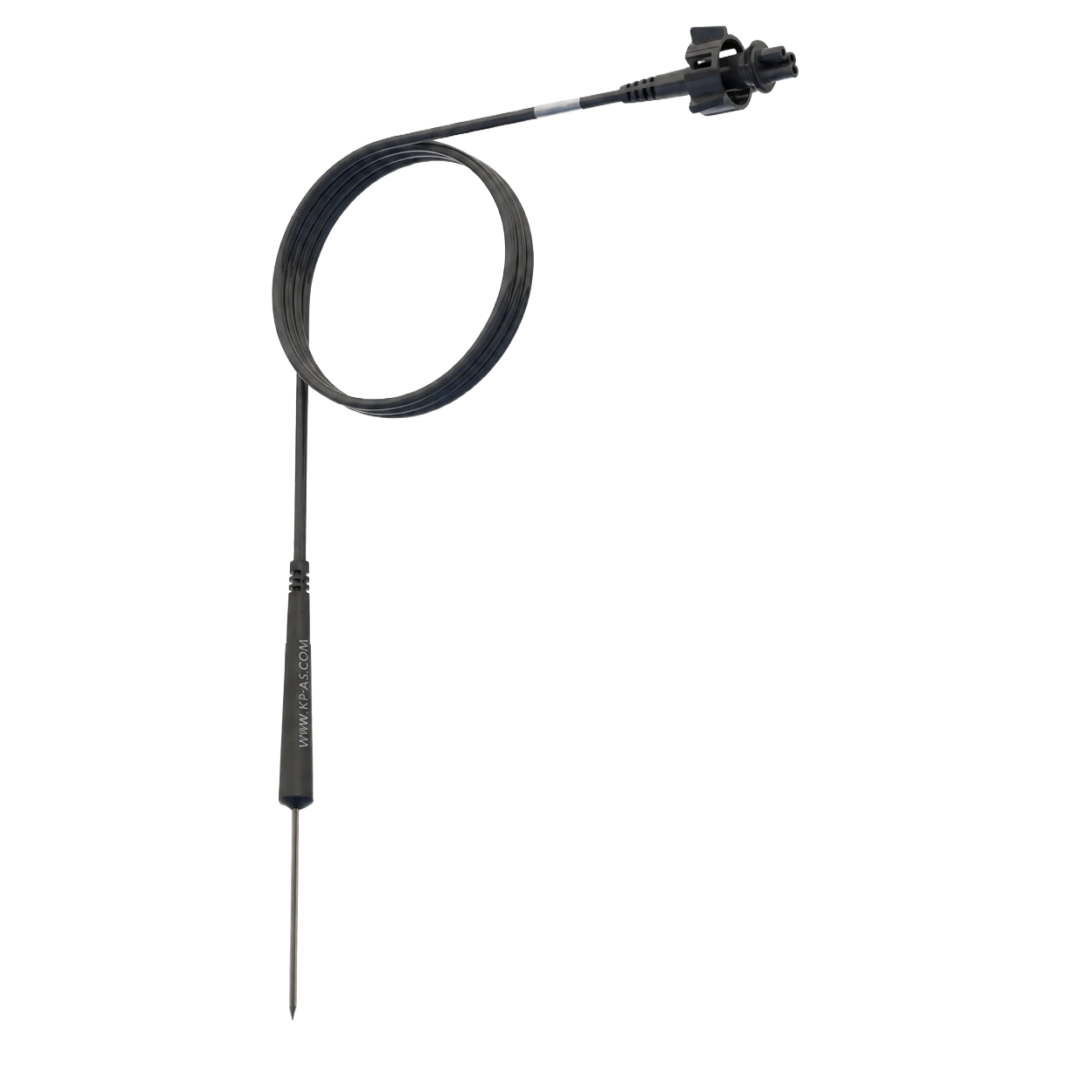
A USDA probe, also called a USDA sensor, is a temperature sensor inserted into the pulp of perishable cargo — fruit, produce, meat — to document in-transit cold treatment during reefer container transport. Unlike standard ambient air sensors, it measures internal commodity temperature, with the reading recorded by the container’s data logger to confirm that required treatment temperatures were maintained. Cold treatment runs just above the point where fresh produce freezes, so the pulp reading is what the treatment is judged on. A 2.5 mm stainless steel tip and a 15 m PUR cable make up the probe assembly.
2.5 mm stainless steel tip — tapered profile enters dense fruit pulp with minimal physical damage to tissue.
NTC thermistor element — measurement element engineered for cold-treatment monitoring.
15 m PUR cable jacket — polyurethane resists mechanical abrasion, pinching, UV exposure, moisture and low temperatures.